
A significant gap exists in the intersecting research fields of creative practice and neurodiversity.
This gap is about the contribution of neurodiverse creative practitioners to the investigation of neurodiverse practices and processes.
It discriminates against neurodiverse creative researchers, and it limits the potential for innovative practices to benefit wider creative fields.
Neurodiversity in creativity is not a problem to be solved, but an exciting area of innovative practices which should be explored.
This project investigates specific neurodiverse creative practices.
It will also look at new ways to communicate and work together which are better for us.
These may be things like
- ‘parallel collaboration’ (working on the same project without using ‘real time’ or ‘face to face’ interactions);
- nonverbal ways to collaborate;
- communicating and researching using creative practice.
The research will be carried out by the whole group using creative work, reflection, consensus and review.
It is multidisciplinary, working within the disciplines of Creative Writing and Disability Studies as well as Linguistics, and arts and activist organisations beyond academia.
Our findings will be gathered and shared through performances, talks, publications and other formats that work for us.
Our findings about existing practices, new performative and collaborative modes, new theories and new ideas for change will be shared within and beyond academic, creative and activist communities using ‘neurodiversity-optimised’ techniques developed during the project. This study of neurodiverse ‘parallel poesis’ will open new spaces for the ongoing performative making of civil society.
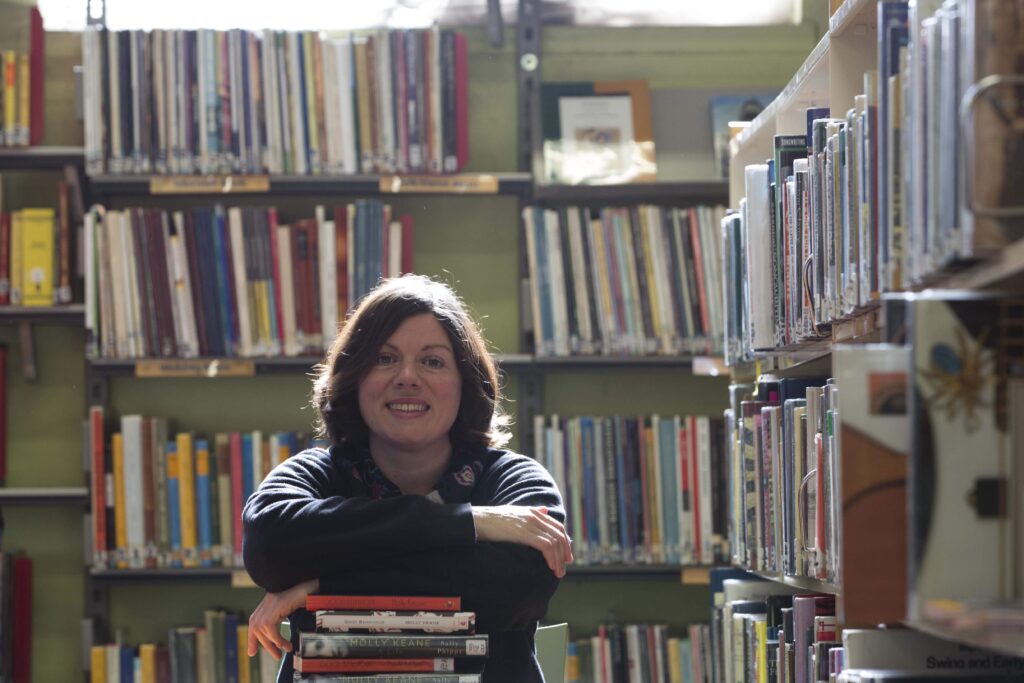
Kathy D’Arcy is an autistic poet, academic and feminist activist from Cork in Ireland, who emigrated to Iceland in 2020.
Poetry:
Her poetry collections are Encounter (Lapwing 2010) and The Wild Pupil (Bradshaw 2012).
Her poetry has featured in Irish literature journals, festivals and media, as well as on Ireland’s flagship arts radio programme Arena.
In Iceland she has been published in the Ós Pressan journal and has performed her work at various reading events and academic conferences. In 2025 her poem '1991: a Space Odyssey' was awarded second place in the Reykjavík Pride Poetry Competition.
Her poetry website is www.kathydarcy.com

Academia:
Kathy completed a Creative Writing PhD, for which she received an Irish Research Council Postgraduate Scholarship, in 2019.
Her academic publications include chapters in Irish Literature, Feminist Perspectives (Carysfort Press, edited by Coughlan and O’Toole, 2008) and Austerity and Irish Women’s Writing and Culture, 1980–2020 (Routledge Press, edited by Flynn and Murphy, 2022).
In 2023 Kathy was awarded an Icelandic Research Fund Postdoctoral Scholarship for her project AnFinn, which will investigate the creation of neurodiversity-optimised creative collaborative spaces.
Activism:
As a feminist activist for many years, Kathy led the Cork branch of the ‘Together for Yes’ campaign to legalise abortion in Ireland by repealing the 8th amendment to the Irish Constitution.
She created the 2018 edited collection Autonomy to raise funds and awareness for that campaign.
From 2017 she participated in the Fired! Campaign which raised awareness of forgotten Irish women poets.
In 2020 she founded the #WakeUpIrishPoetry and SAOI movements, all of which seek to challenge inequalities and sexual exploitation in Irish poetry.
Other Roles:
Kathy has also worked as a doctor, a community, family and youth support worker, a creative writing teacher, an editor, a community health advocate, and in other areas: like many late-diagnosed autistic people, she gained an unusually diverse range of skills and experiences in the search for a work environment she could tolerate.
Practice-Based Research: with this methodology, hypotheses are generated and re-iterated through observation and reflection on creative practice.
PBR blurs and expands the boundaries between art, research, documentation and performance.
Iterative Cycling: ‘as ideas are generated, research and practice are initiated, in conjunction. Various types of output, practical and academic, are produced during the process, which lead to further idea generation, and the process begins again’ (Alice Nant).
These methodologies are in large part developed from Deleuze-Guattarian rhizomatic theory.
Participatory Action Research: this methodology is often used to empower marginalised and silenced groups not just to speak for themselves rather than being 'spoken about' by researchers, but to take ownership of the development and enacting of ideas and real-world changes relating to their community’s rights and wants.
Using these methodologies I am carrying out ongoing, evolving, reflexive data collection leading to re-iterations of the website and the project.
What this means is that I have assembled an international group of neurodivergent creatives who are going to play together on the website I’m developing and see what works, and we’re going to change it depending on what works until it works really well. And we’ll play with things like nonverbal collaboration, neurodivergent language and meaning, neurodivergent sensory experience and experiences of being the world. And we’ll show and share our work online and at real world events; and everywhere we work and share will be optimised for neurodivergence. And we’ll demonstrate what we learn so that places like universities and arts spaces know how to change; and everyone in the group is going to own what they make and the part they play.