
*Online registration still open until June 8 – Arts Festival Event is Free*
***
Inter Lace Work: Autism and Neurodiversity in the Beneath Ecologies of Creative Collaboration
University of Iceland, Reykjavík Arts Festival and Online
🍄🕸🌱🌀🏫
1. Registration 🏫
Registration deadline: May 24 2026
Online only: registration deadline extended to May 30
1. Register for Full Participation: 45,000ISK (est.€310*)
2. Register for Online Participation: 25.000ISK (est.€170*)
In Iceland, contact your union to request an education/training grant
Please indicate your affiliation in the ‘comments’ section of the payment form, as well as whether you wish to attend the conference dinner on June 9th – details below
*currency exchange rates will vary depending on date of purchase
2. Schedules for Conference and Arts Festival Twinned Event
Conference Schedule (10 and 12 June)
Twinned Festival Event Schedule (11 June)
Overview:
- Tuesday June 9th 20:00-22:00:
Conference Dinner
Venue: Studentakjallarinn (Student Cellar Bar)
Menu, allergen information, pictures etc on website
Everyone will order and pay for themselves on-site
- Wednesday 10 June 09:00-16:00:
Conference presentations
Venue: Veröld
- Thursday 11 June 13:00-17:00:
Reykjavík Arts Festival twinned event: Adventures in Neurodivergent Space
Venue: Iðnó Cultural Centre, City Centre
Full Arts Festival Programme here
- Friday 12 June 09:00-16:00
Conference presentations
Venue: Veröld
3. Presenters and Presentations🌱
Conference Host: Kathy D'Arcy
The autistic researcher as enchanted tree
To begin, my apologies that I am unable to attend today’s proceedings because they are unable to let me in. My apologies for this brain. I will not apologise for this brain or the others.
To begin, I must walk into the building
to begin, I must find someone who will fight for a space I can work in
to begin, I must find and pay for and put on the sensory armour I need because the lights make me sick and the sounds fight my thoughts and the people fight my breath
to begin I will find a way to depress hypersensitive brain, activate cataleptic brain, rock constantly, overactivate, obsession, hyperfixation, labyrinthisation, tempo turning to static, cataleptic, hypersensitive. To begin I will have one brain and I will not watch its red light come on after the first flicker of curiosity. To begin I will remember anything. To begin I will say to myself that beginning may not be impossible
to begin I need to wonder why a person who begins like this should even be allowed in
to begin, I have the audacity to
Keynote Speaker: Aby Watson
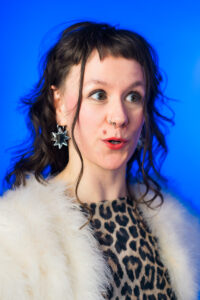
Dr ABY WATSON is a neuroqueer artist, choreographer, performer, academic & activist working across contemporary performance and knowledge exchange. With special interests in stimming, sensuality, ritual, and consciousness, Aby’s playful, stimulating choreographic sensibility explores non-neuronormative potentials in dance through rhythm, repetition, multisensoriality and togetherness. She works nationally and internationally, taking her work to Inter-University Centre for Dance Berlin, Royal Conservatoire of Antwerp, Southbank Centre, Sophiensaele, and Tramway, amongst others.
Aby trained in Contemporary Performance Practice at the Royal Conservatoire of Scotland, where she also earned a PhD in partnership with the University of St Andrews, ‘Disordering Dance: Neuroqueering a Choreographic Practice’, which explores non-neuronormative approaches to making and experiencing dance. Her writing is published in journals Choreographic Practices and Writing in Creative Practice, and in publications by artists Anna Püschel and Dr Daniel Oliver. Aby has guest lectured at Rambert School of Ballet, University of Glasgow, Hochschule für Künste im Sozialen Ottersberg, and Royal Conservatoire of Scotland.
Embodied Efflorescence: Stimming Bodyminds in Performance
The stimming bodymind defies neuronormative presentation. Such neurodivergent mind-bodily-being ‘evokes an efflorescence of energy that cannot be captured as capital’ (Yuill, 2021). As an in-flux, relational and self-regulating mode of embodied process(ing), stimming resists the necessity of product(ivity) and thus becomes ‘worth less’ through a capitalist lens. Choreography is mostly recognised as sequential orderings of movement for reproduction through live performance. So, can stimming ever be choreographic? If so, how might stimming become performance whilst maintaining its resistance to neuronormative demands of linearity, finality and reproduction?
For their performative keynote, neuroqueer choreographer Dr Aby Watson grapples with these questions to explore the potentialities of sensory-seeking, self-regulating performance. Outlining her own strategies of ‘disordering dance’, Watson presents her neuroqueer choreographic aesthetic centring neurodivergent ‘intuitive pattern making’ (ibid), whilst elaborating on stimming’s efflorescence as a flowering, unfolding process of sensuality, play and radical presence through neuroqueer performance in the here and now.
Aby will also perform at the twinned Reykjavík Arts Festival Event – see schedule
Keynote Speaker: Roisin O'Gorman
My work articulates the space between research and arts practice. Engaging creative methodologies and movement based practices from theatre-making with the theoretical frameworks from performance studies, I experiment with different modes, attending and attuning to the interplay between self-other-environment, exploring various platforms to discover the best form to support, develop and communicate the research within a given project.
Interweaving my work as a Somatic Movement Educator along with creative arts practice and traditional scholarship results in a diverse practice as a writer and artist that integrates and cross-pollinates these realms. I work as a senior lecturer at the Department of Theatre, University College Cork, Ireland.
Interlacing Grief Lines: an exploration of somatic and digital movement practices in creative arts research ecologies.
This presentation will share samples from creative research project methods that interlace motion, myth and media as a modes of attending to living with ungrieved histories (including for example, legacies of institutional harms, invisible lives, unarticulated affects, see for example: Falling Gardens and a further work in progress, Grief Lines. My embodied practices focus on the direct experience of the body and its primary languages of movement and affect as key research tools too often elided and overlooked in traditional research settings. Creative arts practices afford ambiguity and affect a central role as both method and focus of research processes. Through a series of examples from current collaborations, I will elaborate on processes where I work through somatic encounters, modes of writing and digital digressions to create landscapes of encounter. These spaces don’t seek to resolve troubled histories but evoke fragments of myth, moments of possible sense-making in order to seek what else we might understand as rage and grief coalesce as much as story, character or fact resolve into neat piles to be filed away. These methods expose how perception, sense-making and knowledge creation are messy modes of foraging, of sniffing out what matters. These modes find pathways in spite of limited archives, and in the face of aching losses, of misunderstandings, misdirection and outright oppressions, and obliterations. I will explore the use of repetition, fragment, sensory-motor loops, and colour as spectral modes of perception to think with the conference themes of neurodivergences and creative ecologies.
Roisin will also offer a movement workshop on the morning of June 11th, as well as screening a film and running a movement workshop at the twinned Reykjavík Arts Festival Event – see schedule
Artist in Residence: Megan Auður
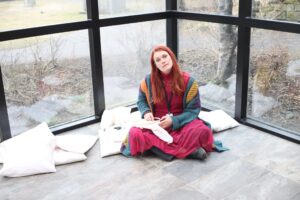
Megan Auður is an interdisciplinary artist and community organizer currently based in Iceland. Her works center on trauma and healing, through creating frameworks for dialogue, support and collective imaginations of possible futures.
Megan holds a BA in Fine Arts from HKU University of the Arts Utrecht (2020) and has since worked in various fields of art, including as an artist, teacher, activist, writer and curator.
In her practice she has co-initiated various long-term collaborations – such as the initiative Tools for the Times (2019- ongoing), and the advocacy group AIVAG, Artists in Iceland Visa Action Group (2021-ongoing).
Megan Auður has previously worked with The Kuno Bienalle, Basis Voor Actuele Kunst, Kunsthalle Wien, and the Impakt festival.
Megan’s residency is supported by a grant from the Icelandic Visual Arts Fund.
Making Neurodivergent Space
For the space I create partition walls aimed to provide shelter and hopefully prevent overstimulation. They are decorated with illustrations of found images collaged together through an art therapy approach mapping my experiences of late diagnosed autism.
Sign Language Interpreter: Bryn Nóel Francis
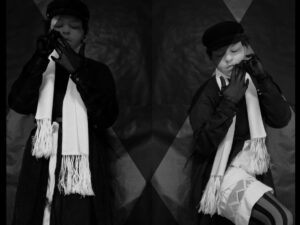
Bryn Nóel Francis is a non-binary artist of colour who works primarily for the purpose of connection and communication. Language is the main material in their work whether on stage or behind the canvas. Working with their knowledge and personal experiences like a journal, a real time document through artistic expression. Communicates an interpretation of art through Sign Language or an art broker through expression.
About: Focused on diverse cultural dynamics, communication patterns, connections, social norms, unwritten rules of cultural behavior and human interactions. Developed a keen interest in traditions, customs, ideology, and cultural awareness.
Pursued a passion for storytelling and documentation as a medium for reflecting values and beliefs in further understanding life.
Dedicated to conveying truth through various expressions such as painting, writing, film, and live performance whether by spoken words, hidden messages, or meaningful silences.
Creating work that resonates with audiences, allowing for open interpretation, reflection and recognition of shared experiences.
Education : Sign Language and Deaf Studies, University of Iceland
Attained a Bachelor’s degree in Sign Language and Deaf Studies from the University of Iceland in 2022. Completed a minor in Art Theory alongside the primary degree.
Pursued a Master’s degree specializing in Art Theory with the research focus on Deaf Art and Queer Art. Focusing on diverse communities.
Kelsie Acton
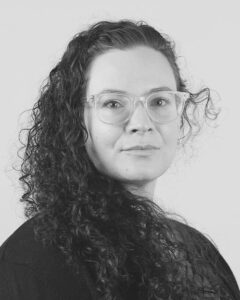
Dr. Kelsie Acton is a neurodivergent researcher, access consultant, and occasional dance artist. She is currently a post-doctoral researcher with the Centre for Performance, Technology, and Equity at the Royal Central School of Speech and Drama and is a long-time member of the Critical Design Lab.
Preparation, Executive Functioning and Exceeding Neuronormativity in Relaxed Performances
Preparation – information gathering and planning – forms an essential part of being a disabled person in the world. This can be seen as part of the administrative labour that characterises disabled experiences (Emens, 2021). Relaxed performance is a collection of practices intended to make live performance accessible to neurodivergent people. Drawing on interviews with 24 relaxed performance practitioners across the English-speaking world, this paper examines the cognitive demands, specifically the executive functioning required of neurodivergent audiences at relaxed performances. Practitioners often experienced pressure to compromise on changes to the light and sound of a production and experienced confusion about what changes to make to light and sound. To address this, they include information about intense or complex lights, sound and smells in the pre-performance information. Therefore, neurodivergent people with sensory sensitivities need to review pre-performance information to prepare themselves for any intense or complex light and sound. Drawing on interviews with relaxed performance practitioners who experience sensory sensitivity I argue that this approach demands high levels of executive functioning – specifically working memory, planning, and monitoring. These demands exceed even neuronormative expectations of audiences, demanding significant cognitive labour of neurodivergent audiences. This paper closes by examining alternatives to the executive functioning demands of current relaxed performance practices, particularly the emerging work of artists with sensory sensitivity who offer creative alternative ways of using light and sound in performance.
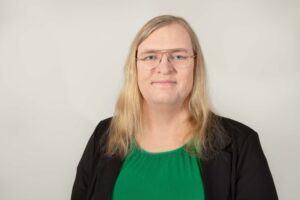
Eva Ágústa Aradóttir
Elías Knörr
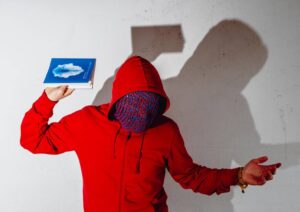
Elías Knörr: Post-Icelandic performer and flamboyant protozoan, flag-bearer of the Ginnungastefna-movement and laureate poet who lives under your bed.
Before becoming a professional disabled, he used to be a linguist and translator.
Elías will also perform poetry at the Reykjavík Arts Festival twinned event: see schedule link
Jay Afrisando
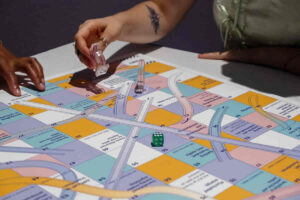
Jay Afrisando is a neurodivergent composer, multimedia artist, researcher, and educator. He works on aural diversity, disability, accessibility, and decolonizing the arts, manifested in music-theater, film, installation, witty storytelling, and other genre-bending experiences. His lived experience as a neurodivergent has created intimate relationships of cross-media and cross-sensory listening practices, and his work celebrates neurodivergent, Deaf, and disabled modes of hearing-listening and builds empathetic listening through various collaborations. His works have been presented at various venues, including Galerie im Turm (DE), daadgalerie (DE), ARTJOG (ID), UCSC Institute of the Arts and Sciences (US), Indexical (US), Curb Appeal Gallery (US), and Attenborough Arts Centre (UK), among others. He is the Atelier KITLV-Framer Framed Artist in Residence 2025-26 and a DAAD Artists-in-Berlin Fellow 2024-25, and currently an Assistant Professor of Music at the University of California, Santa Cruz.
Photo credit: Mareike J. Lange
Neurodivergence as an Artistic Methodology and an Aesthetics: Autobiographical Studies
Enacting neurodiversity justice in the arts would be incomplete without understanding how bodyminds contribute to the arts. One of the disability justice frameworks understands that disabled people are powerful, not because of the complexities of their bodies, but because of them. Artistic practices recognize bodymind as an active agent of making. However, more neurodivergent-centered practices are needed to reinforce the idea of neurodivergence as “a center of many centers,” not as a periphery, in the arts.
This presentation showcases neurodivergence as an artistic methodology and as an aesthetics. Through autobiographical studies, it discusses five works by Jay Afrisando in collaboration with Saverio Cantoni, Simoné Goldschmidt-Lechner, Terry Perdanawati, and Yon Natalie Mik. The artists twisted time through extended online exchange, made neurodivergent traits the primary means of making, and transformed daily experiences into something others could feel, eventually bending conventional artistic forms. All the works discussed advance neurodivergence, along with other disabilities, as an artistic methodology and an aesthetics.
Gaelle Chassery
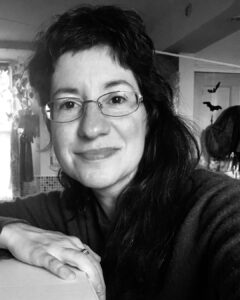
I’m a self-taught sensory artist who provides anchoring spaces of reconnection and regulation through tactile sculptures and mini installations. I’m interested in collaborations that draw people together in various styles, voices, experiences and backgrounds. I write and advocate on the topics of mindfulness, creativity, wellbeing, inclusivity, nature, our environmental impact.
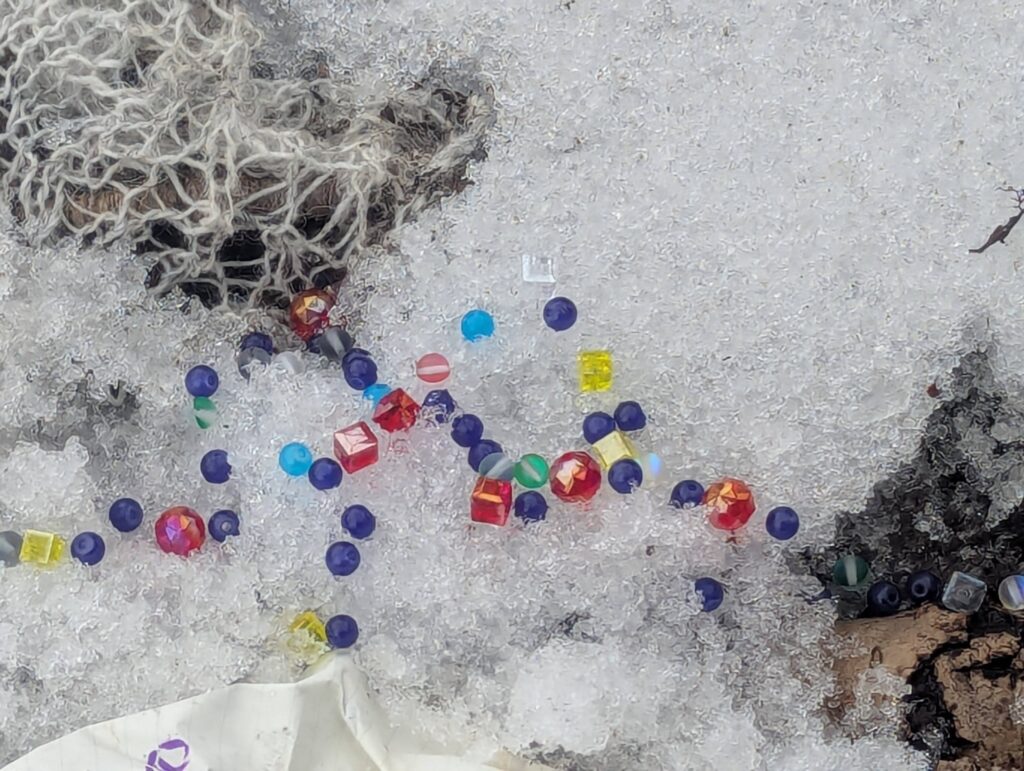
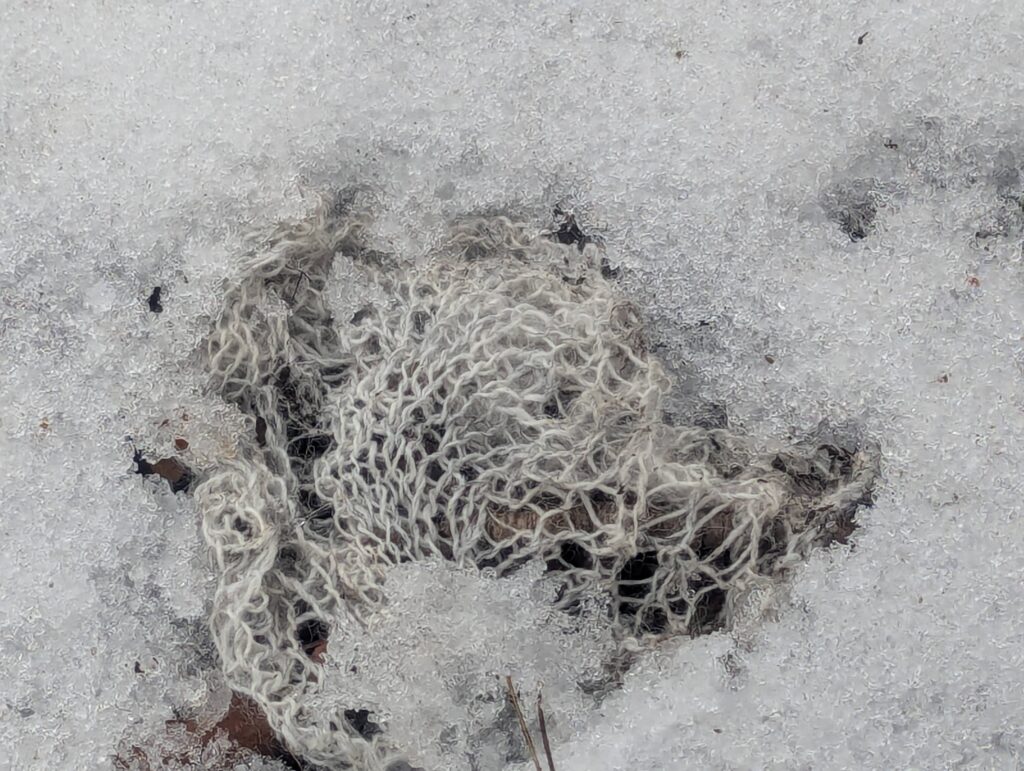
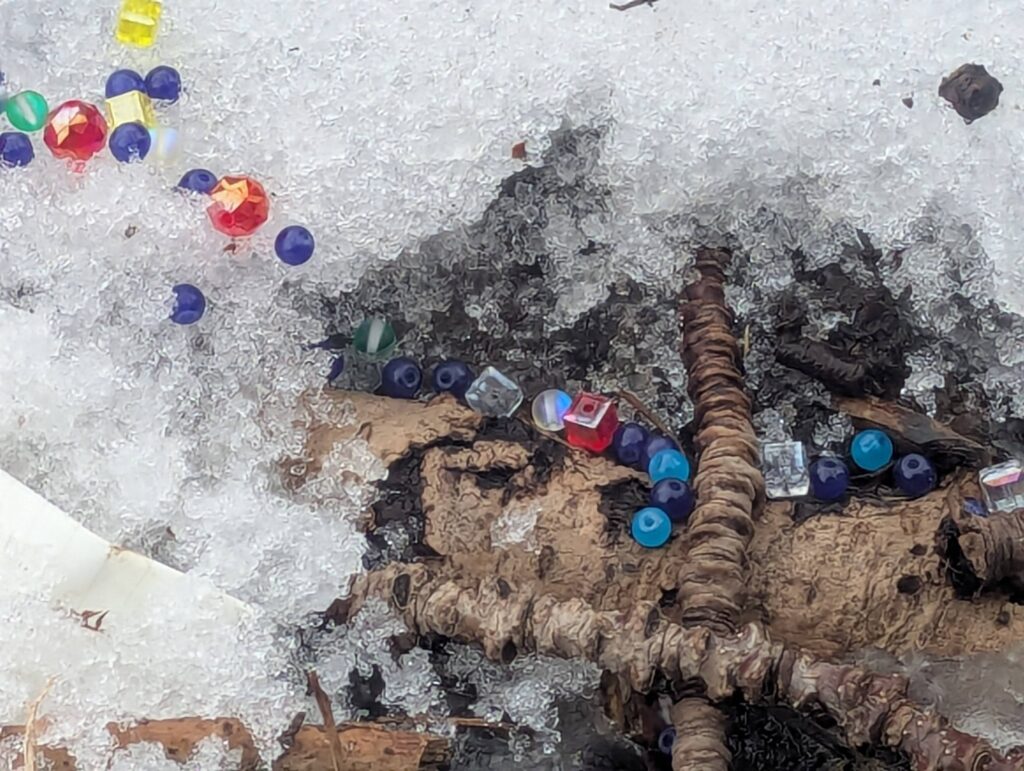
Making Communities in Isolation: from Invisibility to Connection explores how autistic creativity can generate forms of community from within isolation, limited access, and chronic illness. Speaking from my practice as a mostly housebound autistic artist and writer, I consider how wool, sensory sculpture, poetry, and installation become ways of thinking, communicating, and making contact beyond conventional social structures. My work begins in solitude, but it is not solitary in its effects: tactile organisms, textile environments, and material presences create encounters between bodies, senses, animals, landscapes, makers, and viewers. This paper reflects on the ways autistic attention, sensory intelligence, and careful material practice can transform invisibility into relation. It asks how creative work might hold community not only as a social gathering, but as an ecology of touch, care, memory, place, and shared perception.
Martyna Daniel
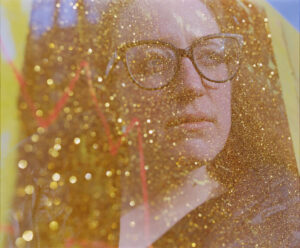
Martyna likes sharp colors, touching stuff and doing lots of things. Someone once said that her paintings were very loud and she liked it. As a cinematographer Martyna primarily works with musicians on music videos and promotional album videos as well as other projects in the cultural sector. She is currently working on a short film exploring neurodivergent identities in Icelandic landscapes. As a painter, Martyna likes to experiment with aggressive colors, sharp textures, glue and all kinds of shiny items. She uses all the sorts of paint she can find but most of the paintings are a combination of acrylic paint, glue and oil sticks. She is working on her first novel, reclaiming repetitive motions that were repressed in her childhood and for the first time ever, feels like she is able to translate her paintings into words on paper.
Martyna also works as a Project Manager of Equity and Community Engagement for the City of Reykjavik at the City Libraries. She co-founded an artist-run space in Reykjavik called Listastofan, which offered a wide range of events including life drawing sessions, creative reading nights, exhibitions and workshops from 2015 to 2019. She is a member of Ós Pressan and currently serves on the board of Reykjavik Poetics and co-organizes literary events around town with a team of wonderful writers.
Typing Sunshine
I will present the process of working on a short film currently exploring neurodivergent identities in Icelandic landscapes. One of the main characters in the film is a yawn that spreads from human to human, sometimes noticed, sometimes unnoticed. Yawning functions as forced empathy in a system that offers none or little—especially to those burned out, neurodivergent, or regulated out of their natural rhythms. It disturbs the mood of efficiency, spreads uncontrollably, and exposes the fragility of spaces designed to suppress rest, stimming, and sensation. The film explores yawning as resistance, as contagion, and as sensory regulation—something intimate that has the power to bring us elsewhere. YAWN is a physical exploration of how we hear, see, and feel when we allow ourselves to stop performing. It is also an empathetic embodied experience that will spread to the audience.
Martyna will also exhibit her work at the twinned Reykjavík Arts Festival event:
Victoria Grey
Victoria Gray [b.1982] is an artist and practice-led researcher and has presented work in the UK, Europe, USA and Canada. With an initial conservatoire training in dance and somatic practice (NSCD, grad. 2004), her primary medium and material is the body. She has a PhD from Chelsea College of Art & Design London, at the intersection of somatics, philosophy, and Fine Art. Her current artistic research is orientated within the field of autistic perception and somatics, drawing on lived-experience, creative practice and philosophy.
Presentations include; Live Art Development Agency (UK), Arts & Health Hub (UK), Shape Arts (UK), FADO Performance Art Centre (Canada), VIVA Art Action (Canada), 5th Thessaloniki Biennale of Contemporary Art (Greece), Yorkshire Sculpture Park (Wakefield), Baltic 39 (Newcastle Upon Tyne), Siobhan Davies Studios (London), 8th Biennial of Photography, (Poznan, Poland), Grace Exhibition Space, (New York), and Centre de Cultura de Dones Francesca Bonnemaison (Barcelona). www.victoriagray.co.uk
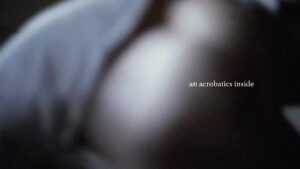
Image credits: Welter. Victoria Gray & Sam Williams.
Welter is a moving image work made by Victoria Gray & Sam Williams. The work explores Victoria’s psychosomatosensory experience of being autistic, as well as her interoceptive experiences of dissociation and complex PTSD, whereby the world feels like a continuous flow of untethered relations between body, line, shape, pattern, light, gravity, and sound.
Welter is an attempt – through movement, sound, text, and drawing – to communicate the invisible, phenomenological dimension of Victoria’s experience of neurodivergence, in order to demonstrate the rich kinaesthetic and psychic intelligences that spring from that inner world.
Guðni Hávarður Guðnason
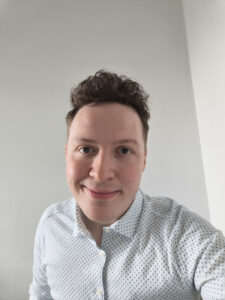
My name is Guðni Hávarður Guðnason and I am a B.A. graduate in Philosophy from University of Iceland. My focus is on utilizing psychoanalytic theories of subjectivity and philosophical linguistic frameworks to better understand contemporary phenomena and issues.
New perspectives on Autism
Autism is often defined as a developmental disorder in diagnostic manuals for psychology. In psychoanalysis, however, it is not so clear. Psychoanalysis as it appears in the teachings of Sigmund Freud and Jacques Lacan offer a more nuanced take on the human being where there was no such thing as a normal or healthy subject. For Lacan, there was Neurosis, Psychosis, and Perversion as the three distinct structures of the human psyche, through this lens psychoanalysis perhaps offers us a more accepting neurodivergent framework, and how Autism fits into psychoanalysis not as an disorder, but as an alternate way of being with its own unique structure of the psyche.
Patrycja Loranc and Sam Johnson
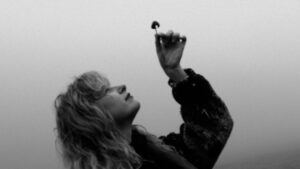
Patrycja Loranc is an experimental filmmaker, artist, and PhD researcher at University of Plymouth. She is also a film programmer and part of Elevation Film Festival, while holding an operational role at a grassroots support charity.
Sam Johnson is a musician, sound artist, and sound engineer, currently completing his MA in Fine Art at University of Plymouth.
Seaing/Hereing is an experimental film/sound art duo creating expanded cinema performances and multidisciplinary installations. The themes of our work are driven by our neurodivergent experience of heightened and altered visual and audio perception. Through flicker and psychedelic film, surrealist poetry, and modified field recordings, our work explores sensory connections to a sense of home among the South West landscapes and seascapes, rediscovering neurodivergent relationships to nature, objects, and spaces.
Sam and Patrycja’s collaborative process of gathering materials in altered states of intense sensory absorption, and editing within experimental structures, draws on an interplay of their neurodivergent perception with avant-garde, poetic, and structural flicker film. The soundtracks are often created solely from modified field recordings on the sites of filming, and explore relationships with nature, landscapes, and objects which we form through our senses, beyond logical and linear thought.
Patrycja and Sam will also screen a film at the twinned Reykjavík Arts Festival event – see schedule
Tina Mariane Krogh Madsen
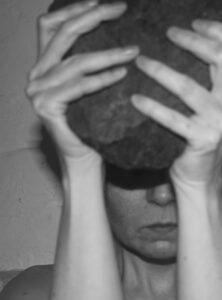
Tina Mariane Krogh Madsen (DK) is an artist, researcher, and educator who works between performance art, sound, open technology and matter, in a mode of practising and collaborating with philosophy and nonhuman agency. Madsen is a Doctor of Arts from Aalto University School of Arts, Design and Architecture (FI), where their artistic research monograph uncovered how ethico-aesthetic modes of relation are crucial in the discussion of contemporary urgencies with a focus on the geological. Madsen further holds a MA in Art History from Aarhus University (DK), and studied art education at the College of Arts, Crafts, and Design (DK). Madsen has performed and presented their work internationally in many formats and contexts, and is the founder of performance protocols, a platform for instruction-based art and collaborative processes, as well as a certified facilitator of Deep Listening workshops from the Center for Deep Listening, Rensselaer Polytech Institute (US).
Tina Mariane Krogh Madsen: event-bodies [folding], public space performance, Saimaanpuistikko, Helsinki (FI), September 2024,
Unconformity: facilitating minor spaces of resistance through geological kinship
Rocks hold memories, multiple timelines, they are sturdy yet fragile to human intervention. Unconformity as a word can here indicate not fitting in a specific set of normative traits but it can also refer to a break in geological time as a non-consistency. Through my artistic research with rock listening and performance, I have investigated how this deep-time relationship can be an informant on contemporary urgencies. As a multisensory mode of activism that functions on paying attention.
By embracing that modes of sensory perception and processing are not based on universals, then this lecture performance wants to open up a space for this divergence, to embrace the need to pause, to breathe, to close your eyes, to touch surfaces, and to land with geological kinship. The idea of the minor is in focus here, as discussed by philosopher Gilles Deleuze and psychoanalyst Félix Guattari (1976), and this means that activating a minor language (in this lecture performance in its broader sense of artistic expressions) within major practices and ways of doing is a tool to rewrite ideas of tradition to focus on diversity in art and academia. Furthermore, I extend the idea of the minor with hesitation (Madsen 2025), to celebrate a potentials that destabilize major modes of research, power, etc., and propose this as a neurodiverse mode of activism.
The form of the lecture performance will be a sensory activation from the attendees’ own space of unconformity from which we collectively will extract a mode agency to deal with urgencies.
Frida Adriana Martins
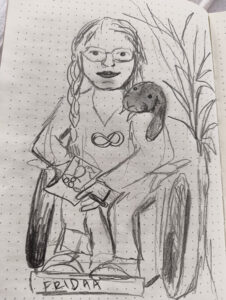
Born in 1981 in Nuremberg, Germany, Frida Adriana Martins is an interdisciplinary artist. Her brain was always chaotic, with lots of thoughts and stories randomly popping up, and only few people could see the fine connections that were hidden under the surface. In today’s time, Frida’s art work mostly features some type of chunky animal delivering constructive criticism on societal and educational dynamics.
Karen Morash and Jessica Andexer
Karen Morash is the Programme Director for the online BA Theatre Studies at Rose Bruford College. She completed a PhD at Goldsmiths (where she also lectured), focusing on the role of the playwright within the collaborative devising process. Her research specialisms include improving accessibility for neurodivergent people in creative workshops, writing in collaborative practice, radical pedagogies of playwriting, and digital teaching and learning.
Karen has worked as a producer and dramaturg in various capacities, including with Head for Heights (headforheights.org.uk), the theatre company she founded with Sue Dunderdale and Prof. Catherine Boyle. She is also an award-winning writer, whose performance and poetry work has featured on number of London fringe stages and festivals, including the Southwark Playhouse, Cockpit Theatre and the New Diorama, and within publications including Room, Bare Fiction, Understorey, Literary Mama, the Live Canon Anthology 2018-2019 and others.
You can find out more about her here
Jessica Andexer has been practicing as a psychotherapist since 2006. In addition to her clinical work, she is an educator, consultant, and mindfulness teacher. Jessica has worked across a wide range of settings, including trauma services, universities, charities, and the NHS – bringing her passion for accessible mental health support to diverse communities. Deeply interested in neuroscience, movement, and creativity, she is always exploring new ways of connecting ideas, especially where science meets mental health and wellbeing. Jessica identifies as multiply neurodivergent, queer, and physically disabled. Creating inclusive, accessible spaces is central to how she works.
Somatic and Mindful Practice for Neurodivergent Writers is a 15-20 minute online workshop, using the model we have developed through our research. This will involve a somatic exercise led by Jessica Andexer followed by a connected writing exercise led by Karen Morash. The low-demand approach of the workshop means that participants have control over their degree of participation, including sharing of work. Participants will be in a space of their choosing (although it will require internet connectivity), with choices in terms of cameras and audio on or off.
This work is part of an ongoing research project, supported by Rose Bruford College of Theatre and Performance, which challenges traditional creative workshop structures which may not be helpful for neurodivergent people. The goal of the workshop is to allow conference attendees to experience our model first-hand so that they can consider if our approach is useful for their own creative practice, but also to offer us reflection and feedback as we continue to develop the model and associated resources.
Dave Osmundsen
Dave Osmundsen (He/Him/His) is an Autistic playwright and dramaturg whose work has been seen and developed at KCACTF Region 8, the NNPN MFA Playwrights Workshop, the Great Plains Theatre Conference, Purple Crayon Players, Florida Studio Theatre, Sewanee Writers Conference, the William Inge Theatre Festival, Premiere Stages, the Valdez Theatre Conference, and more. He was one of two recipients of the Blank Theatre and Ucross Foundation’s inaugural Future of Playwriting Prize. His play Light Switch received its world premiere with Spectrum Theatre Ensemble in April 2022. Light Switch was also the 2021 Distinguished Achievement recipient of the Jean Kennedy Smith Playwriting Award, an Honorable Mention finalist for BAPF 2021, longlisted for the Theatre503 International Playwriting Award, a finalist for the 2020 Carlo Annoni Playwriting Prize, and a semi-finalist for the 2020 National Playwrights Conference. His plays have been published by The Dionysian, Canyon Voices, Exposition Review, Fresh Words: Contemporary One Act Plays Volume 5, and Broadway Play Publishing. MFA: Arizona State University
Getting It “Right”: How One Autistic Playwright Learned to Stop Worrying About ‘Getting Autism
Wrong,’ And How Others Can, Too!
What does “getting Autism wrong” mean? Making fun of Autistic folks? Relying on outdated stereotypes from pre-2000s media? Being offensive? These are all valid concerns, but what happens when we stop trying to “Get Autism Right” and start trying to “Get Autism Equitable”? Playwright Dave Osmundsen, through discussing the journeys of his play, discusses how theaters can take first steps towards neurodivergent inclusion, from rehearsal accessibility to rehearsal accommodations to representation on and offstage. Half-Memoir and Half-Inclusion Guide, this experiential presentation will address the hesitations that many theaters in America express when it comes to Autistic inclusion, the net-positives of accommodating these artists, and how representation moves forward through including Autistic artists in the creative process.
Jody Ozomaki and Ina Taurus

Language can be used to silence, to smother, to confuscate and manipulate. It can also be used to invoke and inspire and quiet the mind. In this space the music flows. Cherry 0P0 is a 3- piece whose music might be described as transcultural Art Rock. Rooted in the raw edges of 70’s punk and the contagious grooves of minimalist disco, the music expands further into post fusion: mixing reggae, funk, and world. Ina, on Bass and vocals is a Yoga teacher and of Filipino descent and Jody is a Tai Chi teacher who studied Anthropology and has traveled the world gathering musical and cultural inspiration along the way. The original band name, Cherry 0P0, embodies the freshness of Spring which rises naturally through contemplation of and respect for our elder traditions as signified by the word OPO which literally means elder in Tagalog.
Pickles & Cream is a three-piece musical group—bass, guitar, and drums—from Paterson, New Jersey, USA.
During our ten-year musical odyssey through the New York City subway system, we performed as official members of MMUNY (Make Music Underground NY). As Tai Chi and Yoga teachers, we naturally attract individuals navigating neurodiversity into our creative orbit. The NYC subway—with its community of unhoused riders, exhausted misfits, searching students, and those simply trying to get through their day—became the ideal place to lay down our grooves and help people get into their bodies. Our lyrics often reflect our own challenges as “sensitives” trying to exist without the security of traditional jobs in a culture that prioritizes money and status over interior exploration.
Part of this journey has been learning to navigate our own neurodiverse insecurities around singing which we experienced as EXTREME stage fright. For years, we had other singers perform our lyrics. Yet the need to express our emotions through singing was so strong we had no choice but to break those barriers. We embraced teaching Tai Chi and Yoga as a means to helping us overcome our fears of saying something too awkward or weird on stage. We discovered confidence in our ‘voice’ and storytelling as our students regularly affirmed that our quirky, humorous teaching styles were uniquely relatable (Jody teaches under the moniker Madmonk).
Once we embraced singing our own songs, our lyrics became more idiosyncratic, more playful, and weird! Our song Briage, a made-up word, celebrates the peonies in our urban forest garden and exposes an existential moment:
“I can’t wait for tomorrow, sitting in the garden looking at spring.” (As in Rachel Carson’s Silent Spring.)
The song follows our creative pilgrimage into singing as “an exploration, beyond explanation, into the heart of surprise; an exploration, beyond exploitation, into the heart of delight and doubt… the stars at our command.” It ends with a triumphant realization:
“Just remember when you are at your lowest limit… anything is possible.”
William Rubel
William Rubel is a professor and playwright who teaches, designs, and leads courses in literature, philosophy, creative writing, and mythology. He holds degrees from Columbia University and the University of British Columbia and is affiliated with organizations such as the Mind and Life Institute, the Center for Process Studies, and the Blake Society. Active in climate-engaged research-creation, he creates and publishes at the intersections of romanticism, posthumanism, and ecophilosophy. His most recent play, Robin Redbreast in a Cage, premiered in the 2025 Vancouver Fringe Festival and continues to evolve for its run in the rEvolver Festival in Vancouver, BC in May, 2026. The Book of Thel – innocence at the edge of extinction
Under Erasure / Weak Solutions: Ensemble-Driven Performance Arts for “Making Sense in Common”
This presentation will take the form of a prerecorded video in which I show and contextualize clips from archival footage. Contextualization will explore the challenges of both productions, for a neurodiverse playwright, working (in the second production) with a neurodiverse actor, and explore the idea of “reworlding” ourselves through the speculative fabulation and the eco-embodied arts. I will propose that neurodiverse artists demonstrate higher levels of “negative capability,” or receptivity, in Whiteheadian terms, to art as actual occasion: a transient concrescence of many prehensions into a shared experiential event.
Ole Martin Sandberg
Ole Martin Sandberg is an environmental philosopher at the Centre for Ethics at the University of Iceland. He leads the research network Climate Crisis and Affect and is affiliated with the Icelandic collaboration platform for biodiversity, BIODICE. He has written about on climate change and social change, biology, ethics, culture and collective imagination. He is currently working on a book on Icelandic nature which draws heavily from the works of process philosophers Whitehead, Deleuze and Guattari.
Autism and Academia: D&G in an even minor voice
The philosophical duo, Deleuze and Guattari wrote a series of books (2) with the subtitle “Capitalism and Schizophrenia.” They distinguish schizophrenia as an experimental process from the medical condition – the schizophrenic patient. Schizophrenia is the process of engaging with the world in a multitude of ways, ways that often “spill over” from one domain to another. The schizophrenic patient, on the other hand, is one who has disengaged from the world after having been stifled in this process. For them, capitalism has elements of the schizo-process, but it also produces schizophrenic conditions: it gathers and unleashes flows of energy, only to redirect them into domains where they can be captured, controlled and stifled. In other words, it promises the unleashing of creative desire but then frustrates that unleashing. It deterritorializes and then reterritorializes.
The result is apathy and withdrawal, symptoms also used to characterize the autistic personality. Indeed, in Anti-Oedipus, D&G often use the term “autistic” to describe the negative traits of schizophrenic patients. Although today, schizophrenia and autism are distinct diagnoses, there are parallels between their description of schizophrenia and autism. What they describe is the autistic shutdown, which is not a natural state but a withdrawal resulting from stifled and frustrated attempts at engaging with the world. Autistic minds spill over from one domain to another, we see connections and patterns that others don’t, and we follow those paths of desire with joy if we are allowed the creative freedom; but when our flow of energy is redirected and restrained, we pull back.
Like capitalism, Academia also has a tendency of seeming to encourage the free flow of creative energy only to contain and punish those who don’t flow the right way. If autism is the minor sibling of schizophrenia, Academia is the minor sibling of capitalism. Both provide avenues of creativity within limits. The creative process is to find those limits and locate the cracks in them.
4. Being here: Accessibility, Accomodation, Transport, Reykjavík, Contact 🌀
Conference Dinner Venue:
Menu, allergen information, pictures etc on website
Everyone will order and pay for themselves on-site: volunteers will be present to assist people who wish to order without speaking or interacting.
The building is accessible including bathrooms and elevator access. There are steps into one section of the bar, and there is a wheelchair lift here.
Conference presentations Venue:
Veröld, University of Iceland:
On June 10th and 12th conference presentations will take place in classroom 7 of the Veröld building.
The building is accessible including bathrooms and there will be a nearby sensory soothing space and assistants present.
Lunch and refreshments (included with registration) will also be served in Veröld, in the cafe space directly outside the classroom.
Arts Festival Takeover Venue:
Iðnó Cultural Centre, City Centre (Festival Club):
The on-campus University Student Hostel is the most accessible option: https://www.studenthostel.is/
Conference Booking Link: https://app.thebookingfactory.com/student-hostel/book/__special_offer_9255#/choose-dates
Use discount promo code ILWC26 for a discount on a limited number of rooms.
The hostel has rooms for people with additional access needs
Other Accessible Accommodation Suggestions:
Accommodation in the city centre can be quite loud, so earplugs are also advisable.
When booking it's a good idea to check location and look at pictures as 'hotel' and 'city centre' can be very broad descriptors in Iceland.
Bus from the airport to BSÍ bus terminal (up to 60min journey):
https://www.kefairport.com/bus to reserve
BSÍ is 1.1km from the university, 1.4km from city centre and 10min or less to anywhere in the city by taxi.
City bus service (Strætó):
Detailed live info and route mapping on Google Maps
Tickets purchased electronically on boarding or through Klappið app:
https://www.klappid.is/en/buy-tickets/klappid-app
The number 2 bus runs from BSÍ to the city, and the numbers 1,2,3,6 and 15 service the university
Taxi:
App: https://www.hreyfill.is/en/download-taxi-hreyfill-app/
Phone: +354 588 5522
Expect taxis in Reykjavík to be more expensive .
Reykjavík is an extremely walkable city, mostly flat with very good sidewalks and multiple crossings. Venues are generally less accessible. In general English is spoken, but signage is often untranslated. The Google Translate camera function is helpful.
https://visitreykjavik.is/getting-around-reykjavik/accessible-reykjavik
Most transactions are electronic and there are only two ATMs in the city (searchable with Google Maps). Icelandic Kronur (ISK) is the only currency used and it is illegal to take cash out of the country. Iceland is a pretty expensive country. Exchange rates.
EU phone plans will allow ‘roaming’.
Bus tickets can be bought on the bus using contactless payments.
Taxi app: there are also several 'taxi stands' searchable on Google Maps.
While usually somewhat warmer in summer (9-15°C) weather can range from blazing sun to very strong wind and rain, so pack accordingly.
Iceland in June experiences almost 24-hour daylight so it’s a good idea to bring a sleeping mask and to use sunscreen.
Culture:
https://guidetoiceland.is/reykjavik-guide/best-things-to-do-in-reykjavik-in-june
Museums etc info/discounted admission: https://visitreykjavik.is/reykjavik-city-card
Link coming soon: until then email kathy@hi.is
5. Taking part in the Anfinn research project on Neurodiversity and Creativity 🍄
This conference is part of the Anfinn Research Project, which explores neurodivergent creative artistic practices and how arts spaces can become more inclusive of these:
The Anfinn project uses practice-based and participatory action research methods to investigate
- why neurodivergent creative outputs, practices and practitioners are often excluded from creativity discourses and spaces;
- how to change this (for example by experimenting with spaces, modes of participation, demonstration and creative activism);
- why to change this (for example considering the harms done to the excluded, the incompleteness of any exclusionary creative movement, the unique innovations and outputs neurodivergent creatives are developing).
The project hypothesis is that the potential for exploration and integration of neurodivergent creativity is disproportionately unrealised due to ableist systems and structures.
The project conference will be a cross-genre (academic, creative, activist, experimental and more) sharing of ideas by neurodivergent creative practitioners and creativity researchers.
6. Autistic idea-networks informing this conference 🕸
The anthropologist Anna Tsing has written about how it is impossible for capitalism to appropriate the matsutake mushroom harvest, because its rhizomatic underground ecology can’t be replicated using profit-making modes. Only those who read the forest (communities often invisible to capitalism and silenced within its discourses) know how to find them.
Nonlinear mycoecology networks do not operate hierarchically, but function to distribute resources on the basis of need: the interconnected relational processes of finding which trace these networks cannot be articulated using the language of patriarchy.
The fundamental importance of mycoecological networks to soil fertility has only recently been discovered by Western science. These networks continue to be destroyed by modern agricultural practices like ploughing, and the use of pesticides and artificial fertilisers, resulting in the ongoing stripping of nutrients from soil and the food grown in it.
In the 1970s, poststructuralist philosophers Gilles Deleuze and Felix Guattari appropriated the term ‘rhizomatic’ (referring at that time simply to the root structures beneath trees) as a way to problematise linear concepts of meaning and interrelation. This concept is now widely applied to the study of creativity and creative praxes, as well as within the disciplines which deconstruct linear concepts of social processes and networks such as feminist studies and disability studies.
Cultural theorist and political philosopher Erin Manning‘s work on non-neurotypical research-creation outlines the importance of looking “underneath” the linear knowledge-creation structures of the commodified university to find research questions and idea-networks that cannot yet be articulated. “Rather than seeing the parts abstracted from the whole,” she says, “autistic perception is alive with tendings that create ecologies before they coalesce into form.”